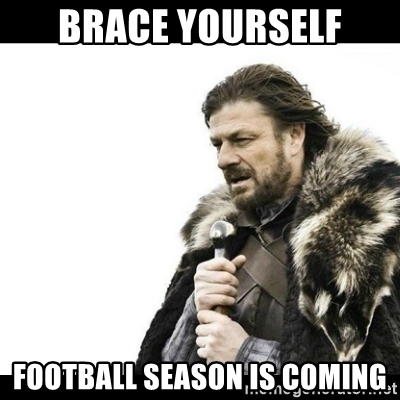
When I hear the word remix, I immediately think about music. Music is constantly being remixed to change the song around, make the beat different, adding parts of lyrics to a new song, etc. The possibilities are endless. This week I came to understand that remix is happening all around me. It is not just the music I hear daily, but it is on my Television, social media, billboards, and everywhere else I can imagine. In this post, we will be looking at what constitutes as remix and how we can use it in the classroom for cognitive, creative, and interactive processing with the students.
The technology I used for my product (which is the meme posted at the top of this blog post) was memgenerator.net. I chose to save the meme as an image on my computer and upload it to this blog post, but you can also share the meme through the site as well. I found that saving the meme as a picture allowed me to upload it anywhere without having to go through a social media sight. However, I would like to point out that the meme can be shared with almost 200 sites or apps from that website making it pretty transferable between databases. These tools are simple to use for both adults and students.
There are so many options out there to use for a remix: meme generators, powerpoint, photoshop, poster maker sites (bighugelabs.com, obamapostermaker.com), voiceovers with pictures, the options are literally endless. So, why did I choose to use memegenerator.com and create a meme? I am so glad you asked. Well, the first reason I chose it was the simplicity of the technology. It took me very little time to be able to navigate the site and build my meme. The site allowed me to choose a picture they already had or I could upload my own. I chose to use one of their options which leads me to my second reason for choosing to use this technology.
With this technology, I was able to incorporate a picture that most people are associated with. Even if you haven’t seen Game of Thrones (which you should really see), you have at least seen some variation of this meme floating around your social media. This technology allows me to find current pictures to remix. This is important when having our students in mind. Sometimes, when we tell our students to go find an image to create a remix with, they may get overwhelmed not knowing what image they should look for. This technology gives them the option of choosing from these popular and socially recognized pictures or choosing their own. The site also gives me the space and tools to add in the text right there, so I do not have to go anywhere else to do that.
Now, this technology is limited. I cannot ad voice or stream together more than one picture unless I create my own collage, save it as a picture, and upload it as a new image (which is a lot of work). This limitation is both a positive and a negative when using this site. It is a negative because you are creatively limited, but it is a positive because it makes the technology easy to navigate and to create with. The meme generator technology allowed me to take a picture and add my own text to the image in order to give it new meaning, and it would be a simple tool to have students use in the classroom to create their own remix.
How is remix beneficial in the classroom? Well, it can be used to allow students to work with a text through expressing their own cognitive understanding in an interactive manner. Jennifer S. Dail and Nick Thompson wrote Talking Back: Remix as a Tool to Help Students Exercise Authority when Making Meaning. In this article, they discuss the use of remix in the classroom to help students in their cognitive process. It is important to note that remix must be explained to the students as Dail and Thompson state in their article. Students must know that “remix is not just using other people’s work, but it is also creating new content to further transform meaning” (Dail and Thompson, 39).
Remix is the process of taking what someone else has already created and tweaking it or adding and/or subtracting to it to give it a new meaning. Let’s take a look at the product I made for this post. We have the picture of Ned Stark from Game of Thrones. The original meme said “Brace Yourself, Winter is Coming.” This is a line from Game of Thrones that Ned Stark says. Now, the meme is used on social media as a way to say that actual winter is coming. This meme has been remixed all over social media, and the picture still obtains part of its original meaning. Most people still use the first line “brace yourself” and then add in their own text to give it new meaning (but the old meaning is never really gone, we just change the words which is an example of the double exposure within this picture). I added in “football season is coming.” In my house, football season is a busy time for us. My honey is a high school football coach, our godson plays football, and we are devoted college football fans (so Saturdays are always taken). Then, there is also our fantasy football league which takes us into NFL. Needless to say, we are a football loving family in this house, and that time of the year keeps us excitingly busy.
Using remix in the classroom allows the students to work with a technology to create a product that shows their ability to find meaning in a text. It can be used as part of their cognitive process. It also gives them a chance to work with more technology. You do not have to limit your students to just the meme generator. Their are a plethora of ways they can remix. This process gives students creative freedom and tie in their own interests or pop culture references to the text. This can also make the text more interesting and broadens their scope of cognition through working toward making their own meaning.
Advice For Teachers:
- Make sure students understand Remix – there should be a new meaning even with double exposure in mind. (Can we really ever be rid of double exposure?)
- Give students creative freedom, but also guidelines and examples to help get them started.
- Discuss the Remix Products – this will help you assess which students meanings/understandings might be “off” and how all the students are viewing the work (remember our own (and our students’) experiences can interfere with the interpretation.
- This gives us a great way to learn about our students and how they are cognitively interacting and understanding a specific text.
 Digitally Diverse